carconnect
carconnect’s website was regularly going blank. Not occasionally, regularly. Their front-end framework was unstable, and every crash meant potential customers landed on an empty page instead of finding the car they were looking for.
The Client
carconnect is a national Australian platform that connects car buyers with the right make and model. When someone knows what they want, they come to carconnect, find it, and submit an enquiry. The business runs on those enquiries. A broken website doesn’t just look bad, it stops the whole operation.
The Challenge
The site was built on Next.js, a modern JavaScript framework that works well when it’s maintained by someone who knows it well. carconnect’s in-house developer was capable, but stretched. Keeping a custom Next.js build stable and up to date was eating time their team didn’t have.
The marketing team had it worse. Adding a blog post meant asking a developer to hand-code it. There was no way to update content independently. So content didn’t get updated, which meant the site wasn’t doing the work it could have been doing.
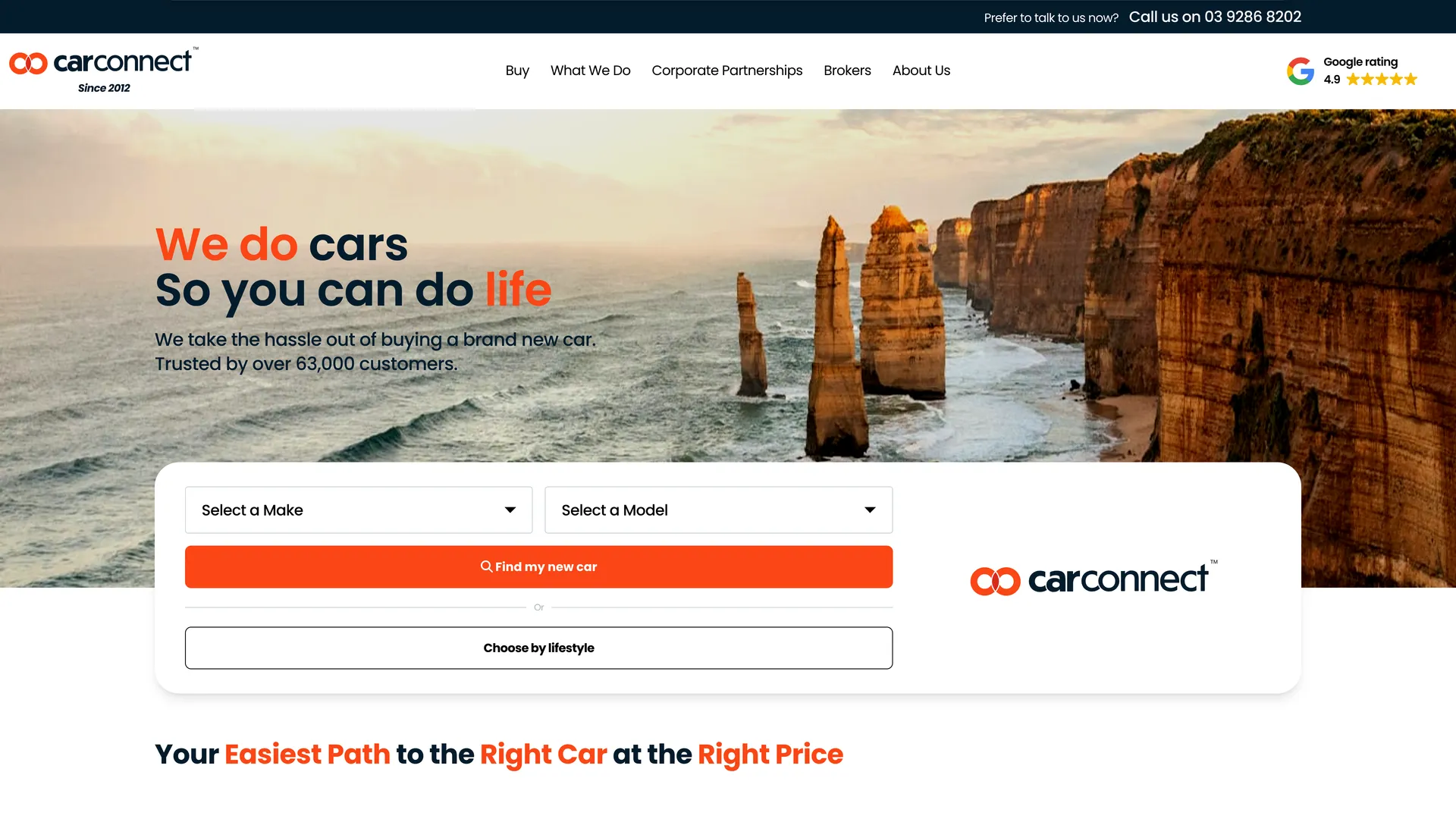
The goal wasn’t to redesign anything. The existing site looked right. The goal was to move it to a platform the whole team could actually use, fix the instability, and keep every existing integration intact.
What Was Built
A Custom WordPress Theme That Matched the Original, Exactly
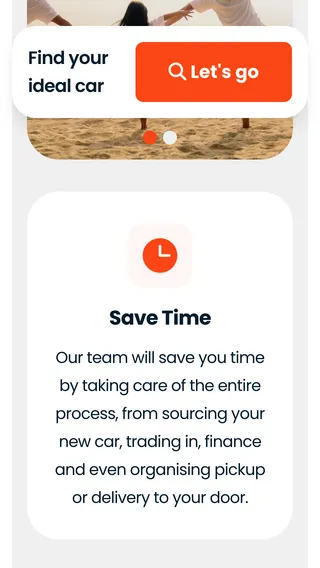
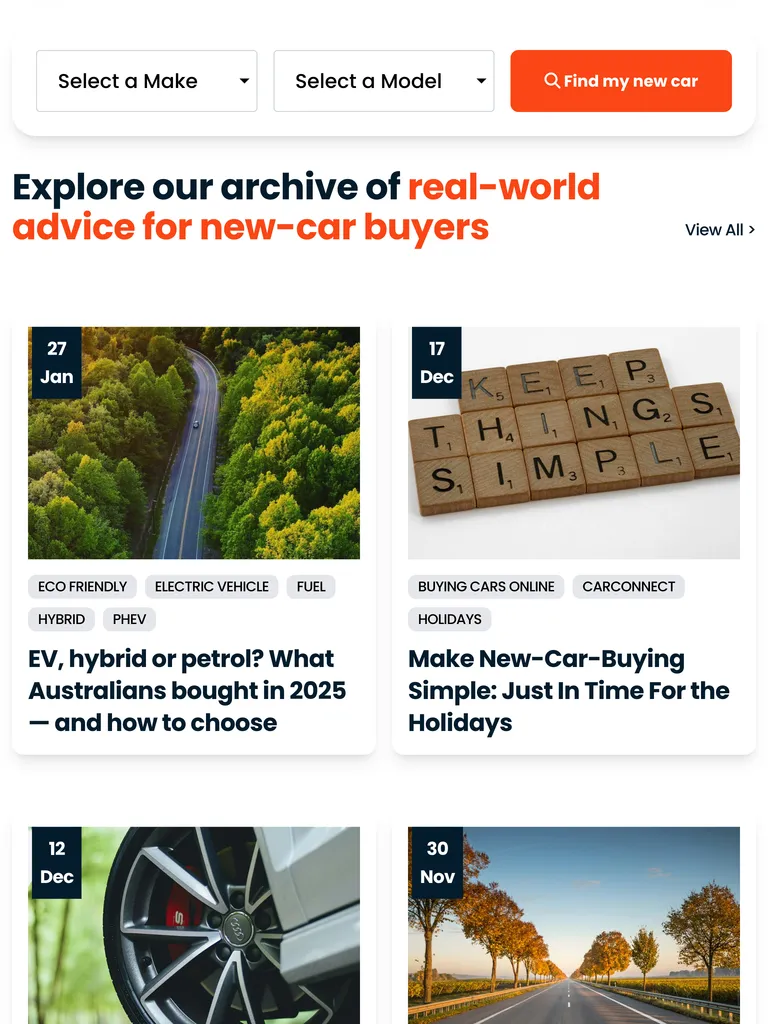
The design wasn’t touched. Every layout, every component, every spacing decision from the Next.js site was replicated in a custom WordPress theme built from scratch. For a visitor, nothing changed. Under the hood, everything did.
WordPress was the right choice here because it gives non-technical staff genuine control over content. The marketing team can now write and publish blog posts without involving a developer. That’s a small thing that makes a large practical difference.
Hundreds of Dynamic Pages, Driven by the Existing CRM
carconnect’s site includes a page for every car make available on the platform, and sub-pages for every model under each make. That’s hundreds of pages in total, and they needed to stay current as inventory changed.
Rather than managing those pages manually, the WordPress build generates them dynamically from the data already sitting in carconnect’s existing CRM. When the backend data changes, the site reflects it. No manual page updates, no developer involvement.
Forms and Lead Flows, Rebuilt and Reconnected
The enquiry forms, the mechanism through which carconnect actually generates business, were rebuilt in WordPress and reconnected to the existing lead management and CRM systems via API. An API is a connection that lets two separate software systems talk to each other. In this case, it meant a customer submitting a form on the website triggers the same lead handling process as before, without any change to the backend.
None of carconnect’s existing infrastructure needed to change. The WordPress front-end slots in as a more stable, more manageable interface for the same underlying system.
The Result
The site has been stable since launch. The crashes stopped. The marketing team can manage content on their own. And the business-critical lead flows, the forms and enquiry paths that drive revenue, kept working without interruption through the migration.
carconnect’s in-house developer is no longer the single point of contact for routine content changes. The site does what it’s supposed to do, reliably, and the team has the access they need to keep it current.